Pearl farming in the USA
The first experimental U.S. freshwater cultured pearl farm was established in
Tennessee by
John Latendresse in 1963. Latendresse is the father of U.S.
cultured freshwater pearls, having spent nearly 30 years and more time, money,
and effort than anyone else in the research and development of the industry.
Since proving the technology for culturing freshwater pearls in the late 1970's, Mr. Latendresse has established five freshwater pearl farms. James Peach, who
once worked with Latendresse, has established a single farm. Additionally, a
single farm has been established in California using mussels from the
Southeastern United States. These farms are the foundation of the U.S.
freshwater cultured pearl industry, and the cultured pearl is the heart and
future of the U.S. pearl industry.
More

Gina Latendresse
I had the pleasure of meeting with Gina and had a short
chat about the state of pearl farming in the US today
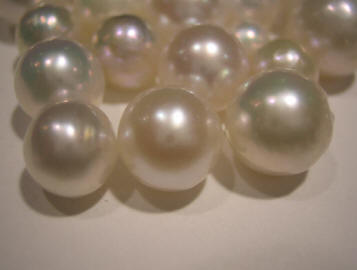
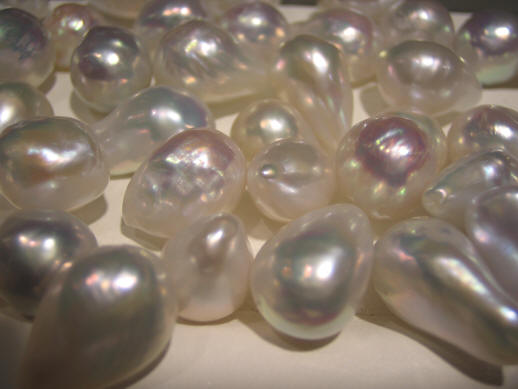
The mussels produce pearls of various shapes but very
rarely round with some having fantastic luster with a rainbow of
translucent orient.
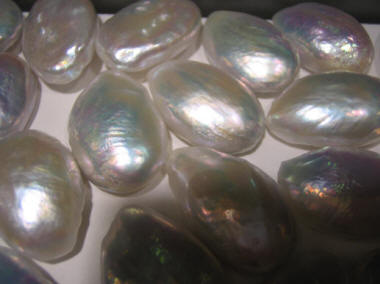
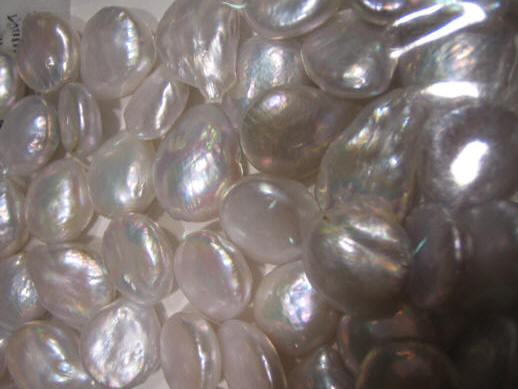
Gina showed me her
prized pearls that she would not sell real gems are hard to come by
In 1961 John R. Latendresse founded the American Pearl Company®, Inc. At
that time, it specialized in natural pearls and imported cultured pearls
from Japan and China. In 1963, John Latendresse was challenged by a group
of Japanese pearl farmers. The conversation was that the finest cultured
pearls in the world came from Japan. He was told he could not grow pearls
in the murky waters of Tennessee. As John would later remark, "its the
muddy rivers of Tennessee, a little bit less romantic, but maybe more
intriguing." Little did they know how determined he would be to succeed in
this project. After testing over 300 bodies of water, ironically enough the
local river was very suitable for pearl farming and it was less than 20
miles from his home. It was the only convenience in his 20 years of
research and development. The first few years were spent trying to attempt
the Japanese techniques on American mussels which were not effective. After
spending over 10 million dollars and 20 years in the making, in 1983 the
first marketable pearls were harvested, but it was not until 1985 that the
company succeeded in cultivating on a large scale the beautiful American
cultured pearls. In 1985 the company was also featured in the National
Geographic Magazine which delivered to the world the news of the newest
addition to the cultured pearl market. American cultured pearl varieties
include the Dome Pearl® (cultured blister pearls), the Fancishape Pearl
(unique coin, rectangular, triangular, cabochon, marquise, teardrops and
navette shapes), and the "Keshi Pearl" which is a byproduct of the culturing
process. Quotations are used around the term Keshi as it is internationally
known as Keshi cultured pearls but loosely called the "Keshi pearl". The
Dome Pearls® are grown for 18 months to 2 years, the Fancishapes are grown
for 3 to 5 years and the Keshis are harvested at the time of the other
shapes. (The three year cultivation period allows for at least 1.2mm of
nacre coating over the mother-of-pearl bead nucleus. Some farms cultivate
for less than 1 year.) John Latendresse knew that the future held the
technology to process all pearls and so he decided not to process his
precious American cultured pearls. And, today the American Pearl Company®
is one of the few farms that does not process their cultured pearls. The
colors and luster are all as nature has intended them to be.
In addition, the American Pearl Company® and their unique cultured pearls
have been featured in Southern Living Magazine, Forbes (Aug 6, 1990),
Audubon (March 1985), Smithsonian (Jan 1998), and Town & Country (Dec 2002)
as well as the industry magazines on numerous occasions. The last national
interview was in 2002 on Sunday Morning News with Charles Osgood.
John Latendresse has been called the father of the American cultured pearl
and is even refereed to by the industry as The Picasso of pearls
because of the distinct shapes of his cultured pearls. His dream was to
cultivate domestic grown pearls and in his travels identify his cultured
pearls based on the shape alone. His intention was to produce a high
quality product with style and distinction from his domestic waters and
before his death in the summer of 2000 his vision was complete. In 2002,
a company invested into the pearl farm and is now promoting the only pearl
farm in the United States for Tennessee tourism attracting tourists from
across the globe to the friendly farm in Tennessee.
Not involved in the pearl farming daily duties, Gina, Renee and Chessy
Latendresse continue the legacy and operate the American Pearl Company® in
Nashville, Tennessee and can be reached at 807 Watts Lane, Nashville,
Tennessee, USA, (615
There is a Myth and a Fact about
Pearl culture. The fact is, no country can culture Pearls without a natural
resource found only in the USA. In the center of every round Pearl is a Nucleus
made from a fresh water shell that is only found in the central USA rivers and
lakes. It has been a well-kept secret for over 100 years and is the foundation
of the world Pearl industry.
To date, 31 different States have
reported production of freshwater pearls and shell. During 1993, 18 States
reported production, they were Alabama
, Arkansas, Georgia, Illinois, Indiana,
Iowa, Kentucky, Louisiana, Minnesota, Missouri, Nebraska, North Dakota,
Oklahoma, South Carolina, South Dakota, Tennessee, Texas, and Wisconsin. The
bulk of the shell and pearl production came from Tennessee, Arkansas, Alabama,
and Louisiana.

more on US pearling:
Reeling in tourists with
freshwater pearls
Hawaii